
*Pork and Vegetable Stir-Fry with Cashew Rice Featuring Oak City Spice Blends Lu Bao
- michel1492

- 5 days ago
- 5 min read
Tender pork, crisp vegetables, toasted cashews, and fluffy rice come together in a quick weeknight dinner that tastes far more complex than the effort required. Instead of measuring garlic, ginger, sesame, chives, and a touch of sweetness separately, this recipe builds those flavors from one balanced seasoning blend. The result is a stir-fry with layers of savory, nutty, and slightly sweet flavors that develops in less than thirty minutes.
One of the reasons stir-fries have remained popular for generations is their flexibility. Almost any vegetables you have on hand can find a place in the pan, making this an excellent recipe for using fresh produce before it goes to waste.

Tender pork, crisp vegetables, toasted cashews, and fragrant rice come together in this quick weeknight stir-fry inspired by the sweet-savory flavors of Lu Bao. The seasoning provides garlic, ginger, sesame, chives, and subtle sweetness, creating a complete dish with very little effort.
Bloom Classification
Medium Bloom (Medium Intensity)
Bloom Medium: Neutral oil
Why the Bloom Works
Neutral oil allows the garlic, ginger, sesame, and chives to gently release their aromatic oils before the meat begins cooking. As the pork browns, those flavors coat every piece instead of remaining concentrated on the surface. When the vegetables and broth are added later, the seasoning has already built a flavorful foundation, giving the finished sauce greater depth with very little effort.
Recipe Information
Prep Time: 20 minutes
Cook Time: 20 minutes
Total Time: 40 minutes
Servings: 4
Difficulty: Easy
Ingredients
For the Cashew Rice
• ¾ cup long-grain rice (140 g)
• 1½ cups water or chicken broth (360 mL)
• ⅓ cup salted cashews, chopped (45 g)
• 2 green onions, sliced (30 g)
For the Stir-Fry
• 1 pound pork tenderloin, trimmed and cut into ½-inch cubes (454 g)
• 1 tablespoon Lu Bao seasoning (9 g)
• 1 tablespoon cornstarch (8 g)
• 2 tablespoons soy sauce (30 mL)
• 1 tablespoon neutral oil (15 mL)
• 2 cups mushrooms, sliced (140 g)
• 1 cup onion, diced (150 g)
• 2 cups sugar snap peas (200 g)
• 1 red bell pepper, chopped (150 g)
• 1 cup chicken broth (240 mL)
• 2 teaspoons honey (14 g)
• 1 teaspoon cornstarch (3 g) mixed with 1 tablespoon water (15 mL)
• 1 teaspoon toasted sesame oil, optional (5 mL)
Method
1. Prepare the Cashew Rice
Cook the rice according to package directions using the water or chicken broth.
Stir in the chopped cashews and green onions. Cover and keep warm.
2. Bloom the Seasoning
In a medium bowl, combine the pork, Lu Bao seasoning, cornstarch, and soy sauce.
Toss well to coat and let stand for 10 minutes while preparing the vegetables.
3. Cook the Pork
Heat the neutral oil in a large skillet or wok over medium-high heat.
Add the pork and cook for 4 to 5 minutes, stirring occasionally, until browned.
Transfer the pork to a plate and set aside.
4. Cook the Vegetables
Add the mushrooms and onion to the skillet and cook for 3 minutes.
Add the sugar snap peas and red bell pepper and cook for 2 minutes more, until crisp-tender.
Return the pork to the skillet.
5. Finish the Sauce
In a small bowl, whisk together the chicken broth and honey.
Pour into the skillet and bring to a gentle simmer.
Add the cornstarch slurry and cook for 1 to 2 minutes, stirring constantly, until the sauce lightly thickens and coats the ingredients.
Remove from heat and stir in the toasted sesame oil, if using.
6. Serve
Spoon the cashew rice into serving bowls.
Top with the pork and vegetable stir-fry.
Garnish with additional sliced green onions if desired.
Best With
• Steamed broccoli
• Snow peas
• Bok choy
• Grilled pineapple
• Cucumber salad
Flavor Lesson
One of the biggest mistakes in home stir-frying is trying to create the sauce at the end. Great stir-fries actually begin long before the liquid is added. Browning the meat after the seasoning has bloomed creates flavorful browned bits on the bottom of the pan. When the broth is added, those caramelized flavors dissolve into the sauce, giving the dish much more depth than seasoning added at the end ever could.
From the Spicekeeper's Journal
One of the things I appreciate most about stir-fries is that they reward good technique more than expensive ingredients. A simple pork tenderloin, a handful of vegetables, and a little attention to how flavors develop in the pan can produce a meal that feels restaurant-worthy. Every time I make a recipe like this, I'm reminded that great cooking often comes from understanding when to add flavor just as much as what flavor to add.
Tomorrow's Table
One of my favorite things about this recipe is that it practically plans tomorrow's lunch for you.
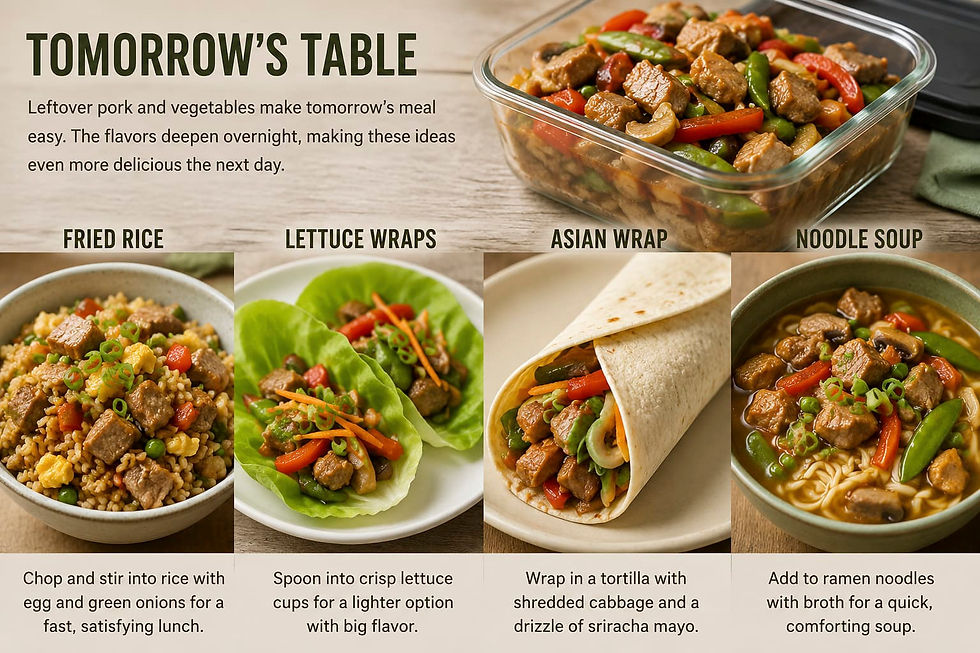
Leftover pork and vegetables can be chopped and folded into fried rice with a scrambled egg, wrapped in lettuce leaves for a lighter meal, tucked into a tortilla for an Asian-inspired wrap, or spooned over cooked ramen noodles with a splash of broth for a quick soup. Because the flavors continue to mingle overnight, many people find the leftovers even more satisfying the next day.
Estimated Nutrition (Per Serving)
Calories: ~470
Protein: ~36 g
Carbohydrates: ~34 g
Fat: ~20 g
Fiber: ~4 g
Sugar: ~8 g
Suggested External Resources
Recommended Cookbook References
Young, Grace. Stir-Frying to the Sky's Edge: The Ultimate Guide to Mastery, with Authentic Recipes and Stories. Simon & Schuster, 2010.
ISBN-13: 978-1416580577
Lopez-Alt, J. Kenji. The Wok: Recipes and Techniques. W. W. Norton & Company, 2022.
ISBN-13: 978-0393541212.
Dunlop, Fuchsia. Every Grain of Rice: Simple Chinese Home Cooking. W. W. Norton & Company, 2013.
ISBN-13: 978-0393089042.
Young, Grace. The Breath of a Wok: Unlocking the Spirit of Chinese Wok Cooking Through Recipes and Lore. Simon & Schuster, 2004.
ISBN-13: 978-0743238274.
Lo, Eileen Yin-Fei. The Chinese Kitchen. William Morrow Cookbooks, 1999.
ISBN-13: 978-0688157746.
These five books complement one another nicely:
Grace Young explains the philosophy and mechanics of stir-frying.
J. Kenji López-Alt dives into the science behind wok cooking and high-heat techniques.
Fuchsia Dunlop emphasizes authentic Chinese home cooking with approachable recipes.
Eileen Yin-Fei Lo provides a strong foundation in classic Chinese techniques and ingredients.
Spicekeeper's Note
Lu Bao was designed around the balance of garlic, ginger, sesame, chives, and subtle sweetness. Those same flavors appear throughout many East and Southeast Asian stir-fries. By allowing the seasoning to replace several individual ingredients, the dish becomes easier to prepare while maintaining the layered flavor that makes stir-fries so satisfying.


Comments